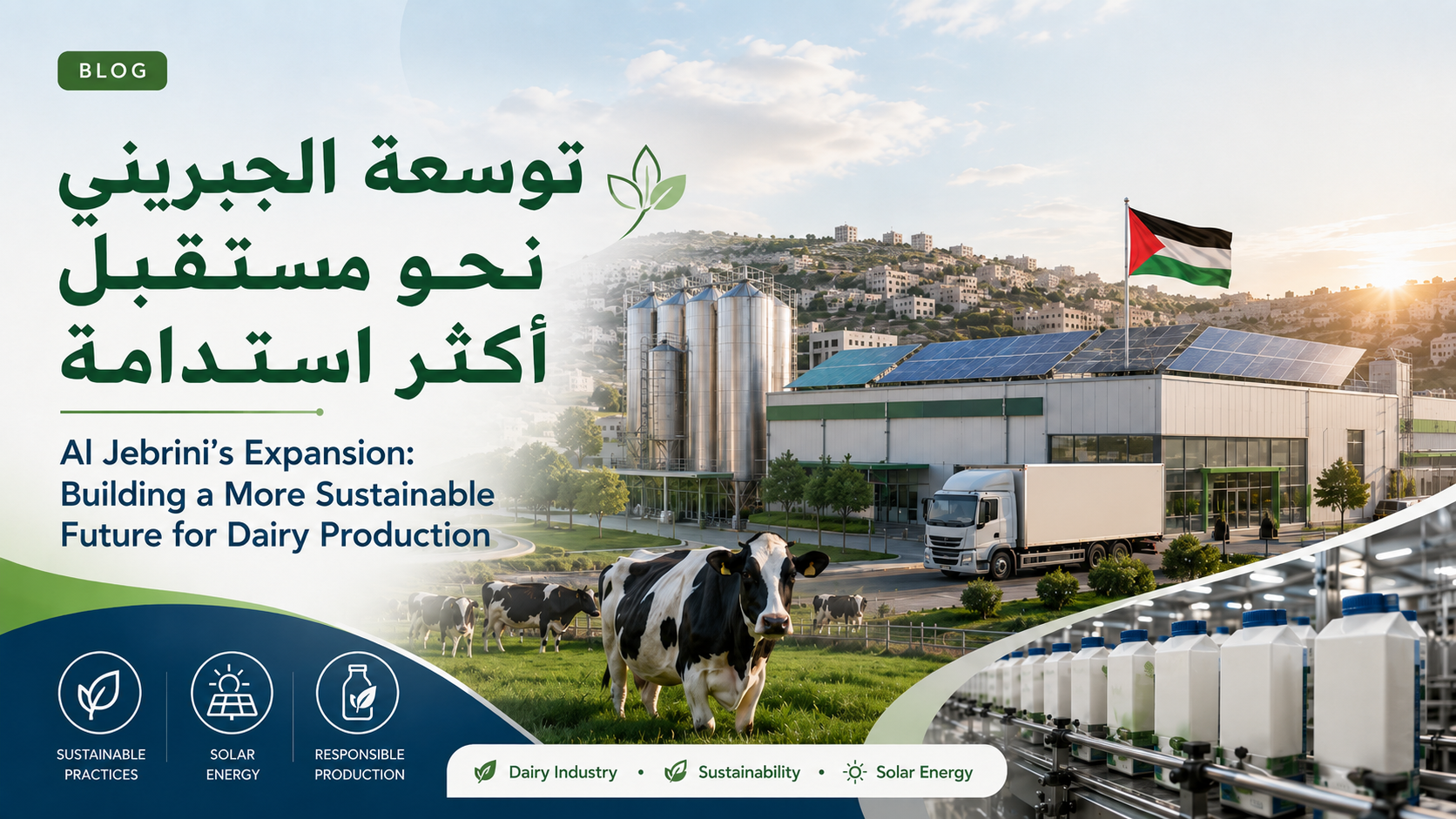
Al Jebrini Co. for Dairy and Food Industries continues to strengthen its role as one of Palestine’s leading dairy producers through a strategic expansion project in Al Thahreyeh, Hebron Governorate. This expansion reflects the company’s commitment to increasing production capacity, improving supply-chain resilience, and adopting more sustainable solutions across energy, manufacturing, and resource management.
The expansion project includes several key components: the expansion of the dairy cow farm, the establishment of a new food-grade plastic packaging factory, the development of an artisanal “Baladi” dairy factory, and the installation of a 500 kWp rooftop solar photovoltaic system with battery storage. Together, these investments aim to support local production, reduce dependence on external suppliers, and improve the efficient use of energy and resources.
The new plastic packaging factory is an important step toward greater industrial integration. By producing bottles, cups, containers, caps, and other packaging materials in-house, Al Jebrini will be able to improve quality control, ensure a more stable supply of food-grade packaging, and reduce exposure to external supply disruptions. At the same time, the artisanal dairy factory will support the production of traditional, high-value products such as local cheeses, labneh, jameed, and ghee, while maintaining modern food safety and hygiene standards.
Sustainability is also a central part of the expansion. The rooftop solar PV system will help reduce reliance on grid electricity and fossil fuels, lower greenhouse-gas emissions, and improve energy security for the company’s operations. Combined with existing resource-efficiency measures, this investment supports a cleaner and more resilient production model.
Al Jebrini is also placing strong emphasis on environmental and social management. The project includes measures related to occupational health and safety, wastewater and manure management, solid waste handling, fire safety, stakeholder engagement, and grievance mechanisms. These actions are designed to ensure that business growth is aligned with environmental protection, worker safety, and community well-being.
link of research